Trusted by 500+ Healthcare Facilities
Insights That Shape Healthcare Sterilization
Stay updated with expert perspectives, best practices, and the latest innovations in sterilization technology.
Read Our Latest Blog Posts
Explore articles that uncover challenges, share solutions, and highlight advances in infection control.
Packaging errors do more than waste time. They create uncertainty throughout the sterilization process. This article explains why proper sealing, labeling, and packaging consistency are critical to maintaining an efficient and reliable reprocessing workflow.
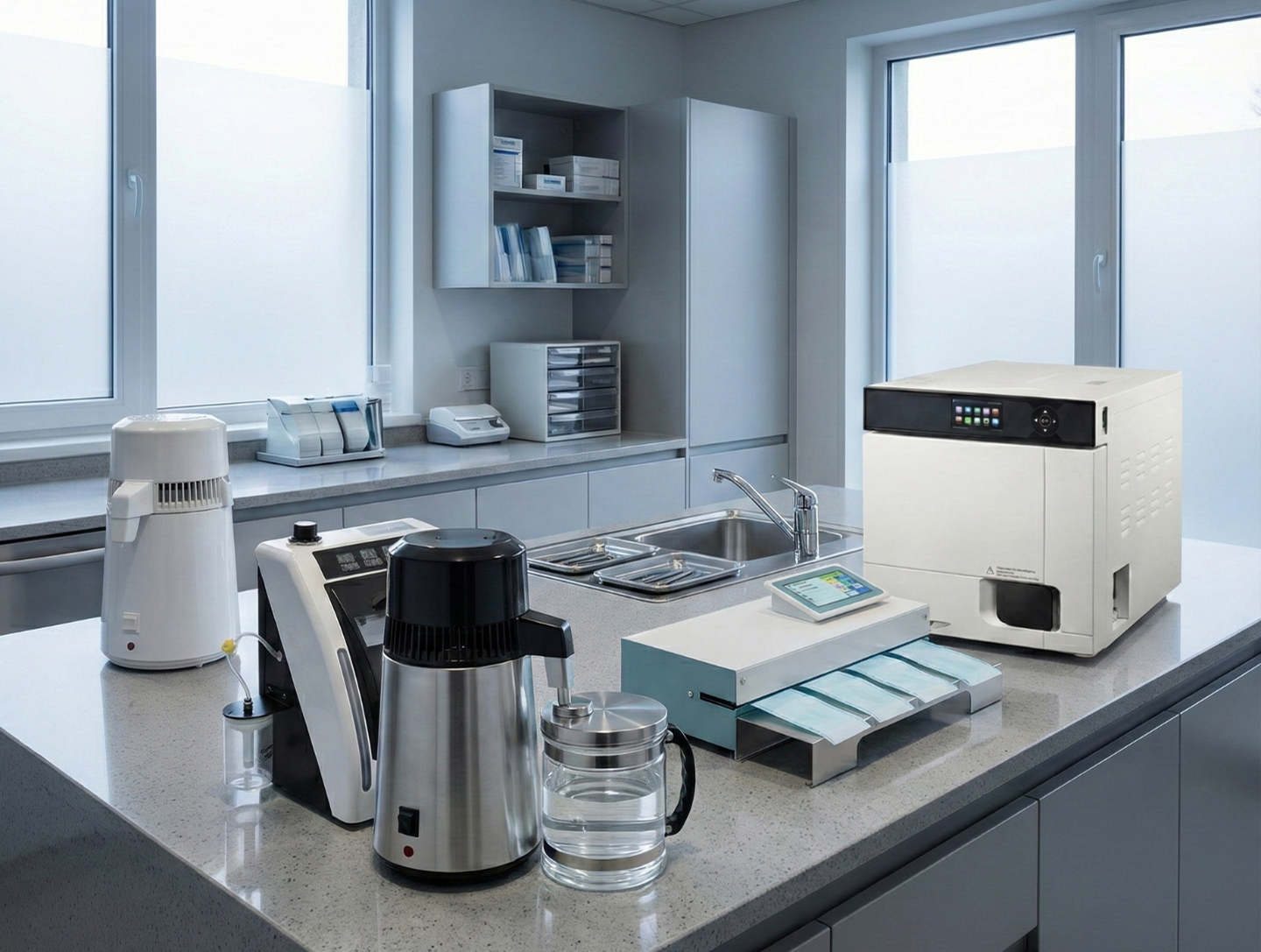
Water support is often overlooked when planning a sterilization room, yet it directly affects equipment reliability and maintenance requirements. This article explores why water distillers and proper water management are essential parts of a dependable sterilization system.
Learn how small practices can choose sterilization equipment that meets current needs while allowing room for future growth. Discover why workflow planning, usability, and system design matter more than simply choosing the biggest sterilizer.
High-performing reprocessing rooms are not just well-equipped. They are well-organized, standardized, easy to train into, and built around equipment that matches the real workflow. This blog explains the common traits of strong sterilization rooms.
Some workflow problems are not caused by staff performance or poor habits. They are often caused by equipment that does not fit the workload, space, or process. This blog explains five common signs that a workflow issue may actually be an equipment problem.
Packaging is often treated as a small step in sterilization, but it plays a major role in inspection, organization, labeling, sealing, and workflow confidence. This blog explains why packaging deserves more attention in every reprocessing room.
This blog outlines seven practical questions clinics should ask before purchasing sterilization equipment, helping buyers evaluate workflow fit, volume, usability, maintenance, documentation, room layout, and supplier support.
Choosing the right steam sterilizer is not only about chamber size or technical specs. This blog explains why growing practices should think about sterilization as a workflow decision, including capacity, turnaround, maintenance, documentation, and long-term scalability.
Sterilization should be more than a compliance requirement. This article explains how clinics can turn sterilization systems into a workflow advantage by reducing rework, improving consistency, and increasing operational confidence.
Scaling sterilization capacity requires more than adding equipment. This post explains how workflow design, support systems, documentation, and maintenance must evolve together to avoid new bottlenecks.
Not all sterilizer features matter equally in a busy clinic. This article explains the five most important factors, including chamber fit, drying reliability, traceability, and workflow integration.
This post highlights five common ways clinics lose time between cleaning and sterilization, including early packaging, poor inspection space, and unclear workflow ownership. It focuses on improving efficiency in the most overlooked part of reprocessing.